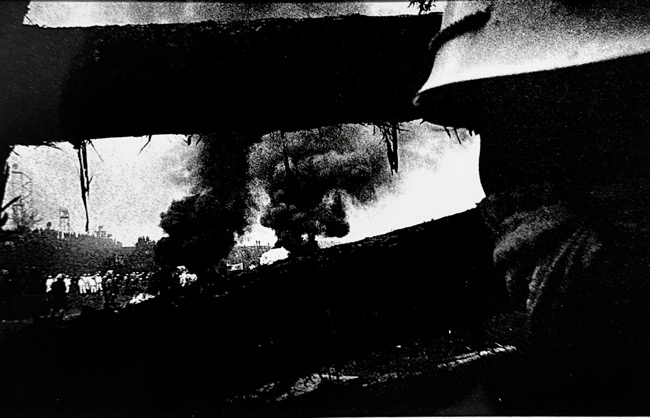
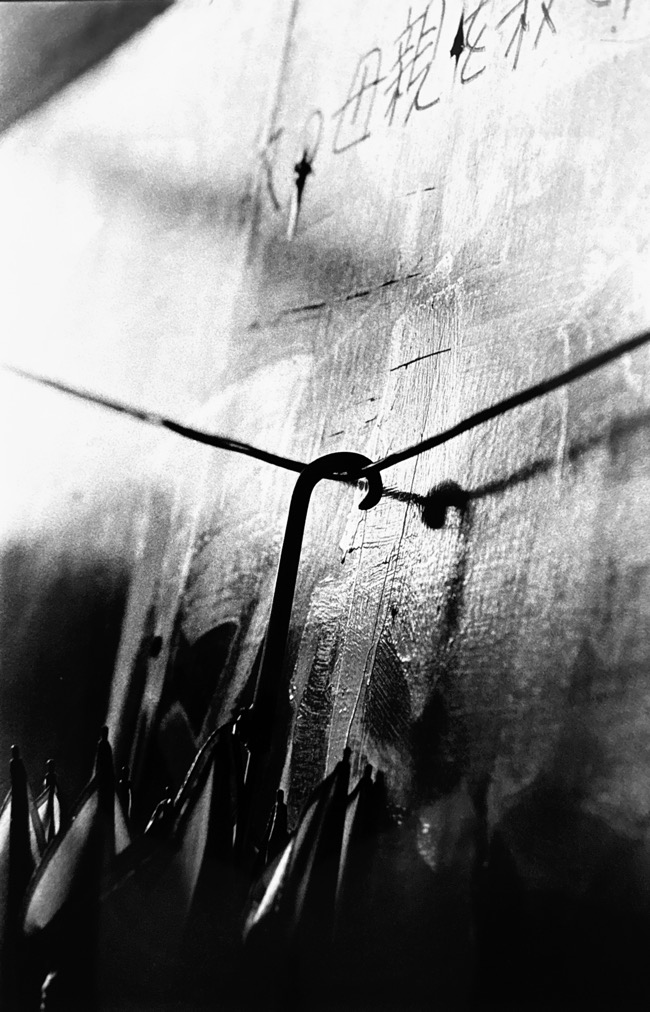
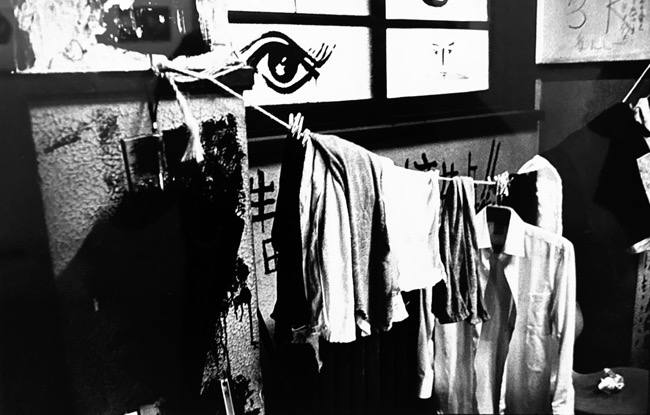
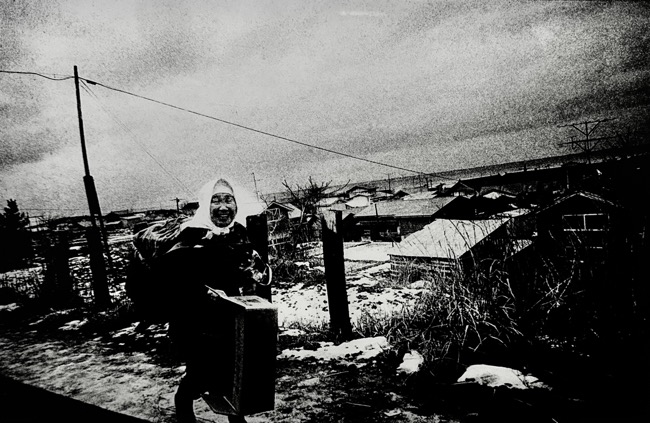
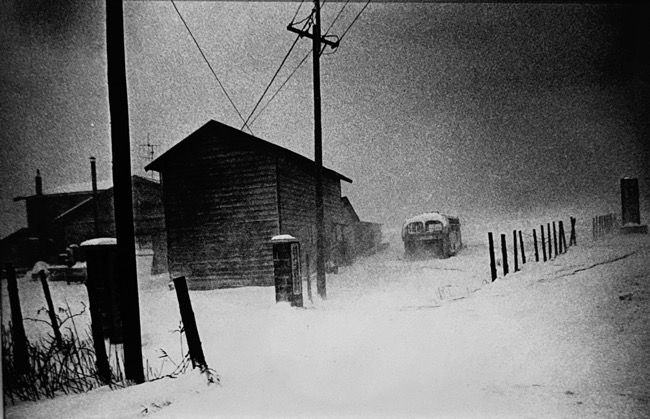
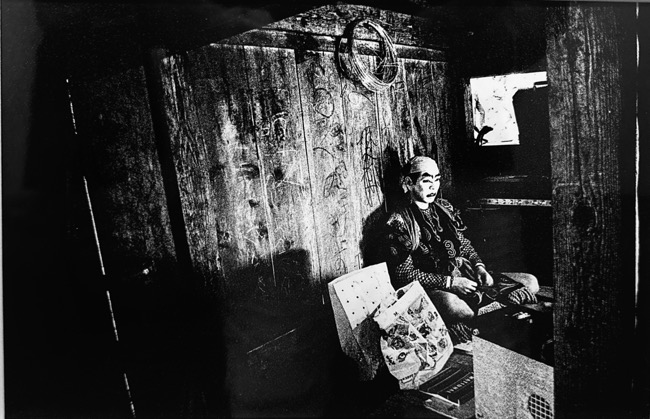
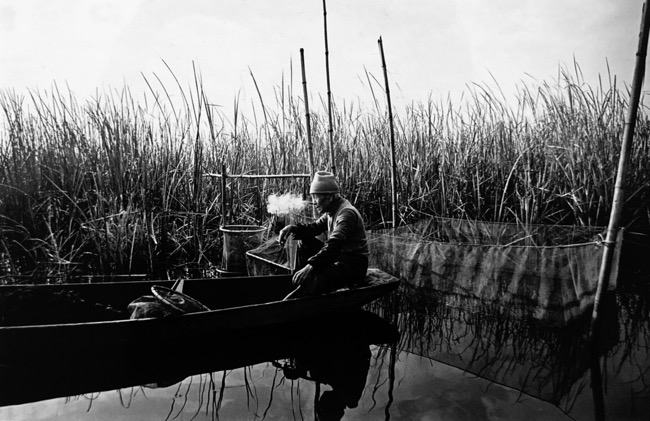
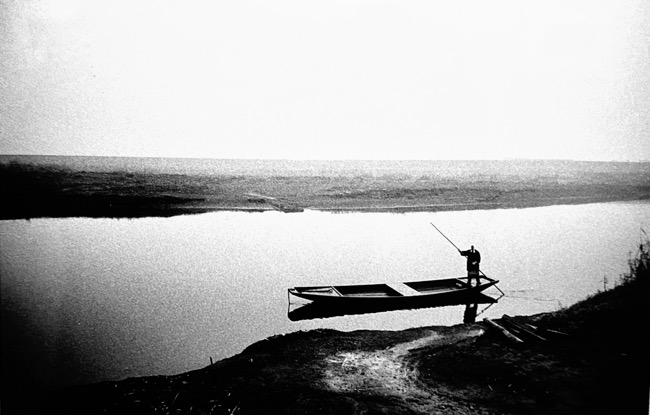
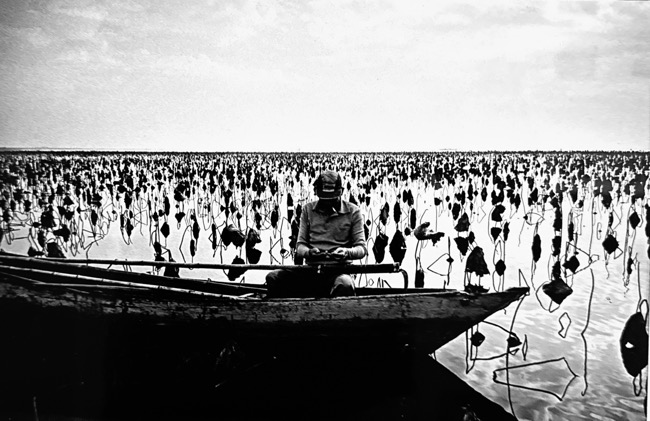
Kazuo Kitai is one of Japan’s great photographers, although he remains relatively unknown in Europe and was entirely unknown to me. It was my friend L’Oeil Curieux, in one of his brilliant and very personal notes, who sparked my curiosity and led me to visit the retrospective presented in a beautiful and generously sized space at the Cultural House of Japan in Paris (Maison de la Culture du Japon à Paris). Since the 1960s, Kazuo Kitai has photographed Japanese society from the inside, capturing student protests, growing suburbs, and the beauty of everyday life in rural Japan. The retrospective brings together around 130 photographs, tracing his career from his early socially engaged work through to his most recent and personal images. The exhibition is divided into four sections: his photographs of the student movement, the Japanese countryside in the 1970s, everyday life in the suburbs of Tokyo and the working class district of Shinsekai in Osaka, and finally his recent series IROHA, which shows that even at eighty, he continues to look at the world with curiosity and a fresh eye. A marvel for my (hungry) eyes, and a genuine discovery. His photographs around Narita brought back a distant childhood memory, the shock of watching the violent confrontations between demonstrators and police over the construction of a new international airport near Tokyo. And then, alongside those images, something quieter: an umbrella left hanging, towels drying in the wind, simple yet powerful photographs. The isolation of rural Japan, felt in both its buildings and its people. The stillness of fishermen, patient and meditative or simply the wind blowing on a wintery landscape.