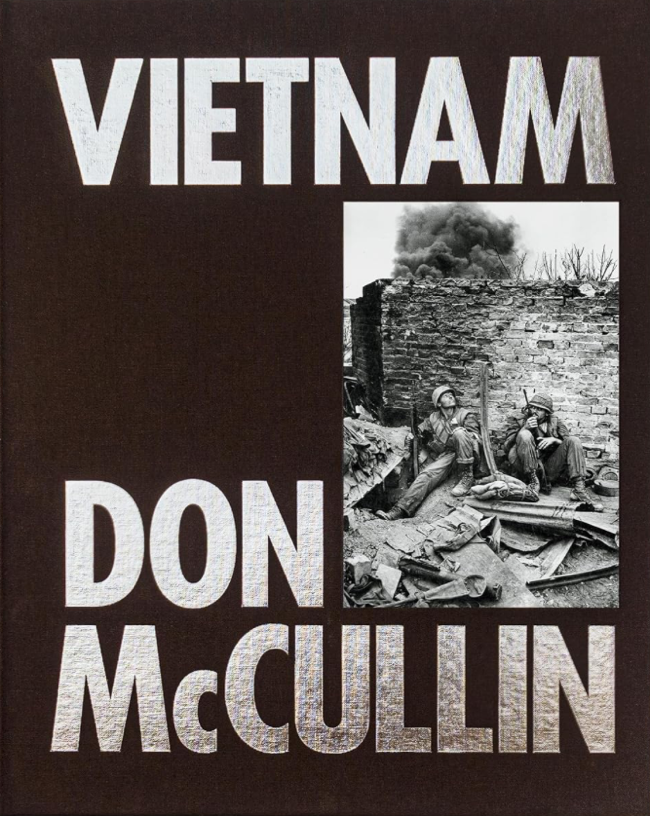
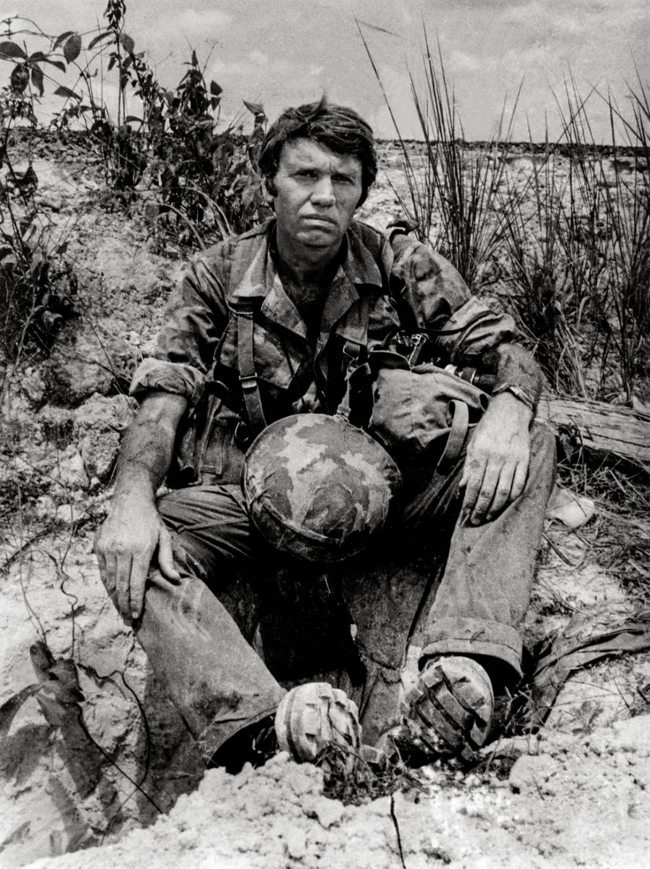
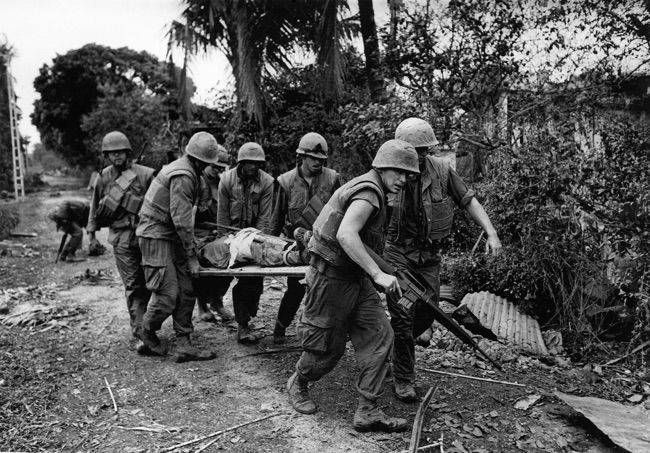
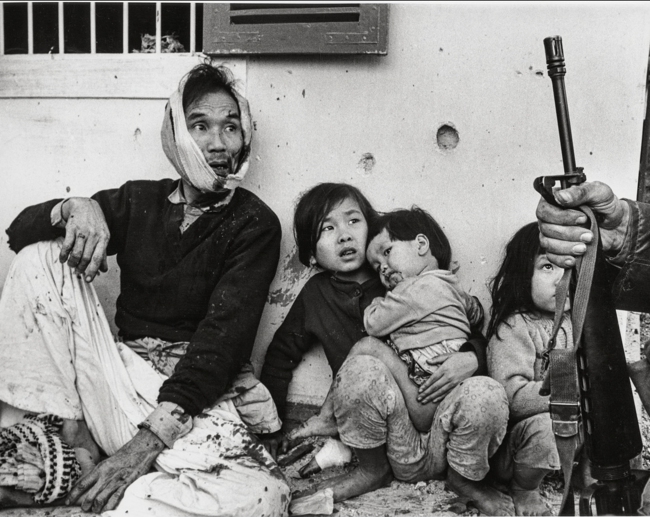
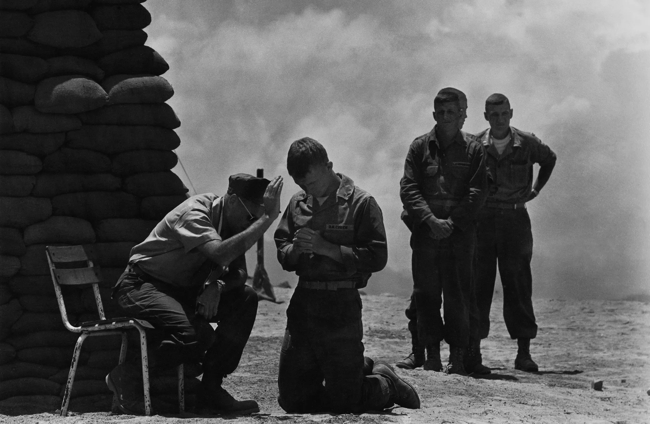
Don McCullin has always held a special place in my own pantheon of photographic gods. If Henri Cartier-Bresson sits at the very top of the hierarchy, McCullin is certainly not far behind. Now aged 91, the legendary photographer has announced that this will be his “very last book”. To my absolute delight, his iconic photographs of the Vietnam War have finally been brought together in a single volume. The book had to come all the way from the UK, but it was worth the wait. And here it is. Magnificent. It brings together around 100 black-and-white photographs and more than 20 colour images, selected from the approximately 90 rolls of film he shot during his three trips to Vietnam, in 1965–67, 1968 and 1972. Almost half of the photographs have never been published or exhibited before. Alongside contact sheets, McCullin’s own commentaries and personal reflections, they offer an incredible insight into his work, bringing us very close to the realities of combat. He was effectively an embedded photographer before the term was broadly used. Nothing distinguished him from an ordinary GI, except that his only weapons were his cameras and the sign on his helmet identifying him as “From England”. The book includes some of his best-known images, among them the portrait of a shell-shocked Marine, of which he took five frames, as the contact sheet reveals. But these now iconic photographs sit alongside less familiar scenes of everyday life during the war: the dead and the dying, raising difficult questions about the ethics of photographing human suffering; soldiers being dragged from bunkers, paysans being in the cross fire and the mountains of human and military mess left behind by the chaos of war. As McCullin himself has said, he had no enemies. His ambition was not to take sides, but to show war in all its horror, without looking away. This is more than a magnificent collection of photographs to me. It is a powerful testimony to the human cost of war, and to the courage and humanity of a photographer who spent his life bearing witness, and carrying this suffering to this day. McCullin came close to death on several occasions, yet one particular remark in the book reveals his extraordinary attitude and (British) dark sense of humour. Before taking photographs in the midst of cross-fire, he would regularly take light-meter readings and tell himself: “You must be mad, but don’t get the exposure wrong.” A wonderful illustration of his composure and professional instinct in the face of unimaginable danger.